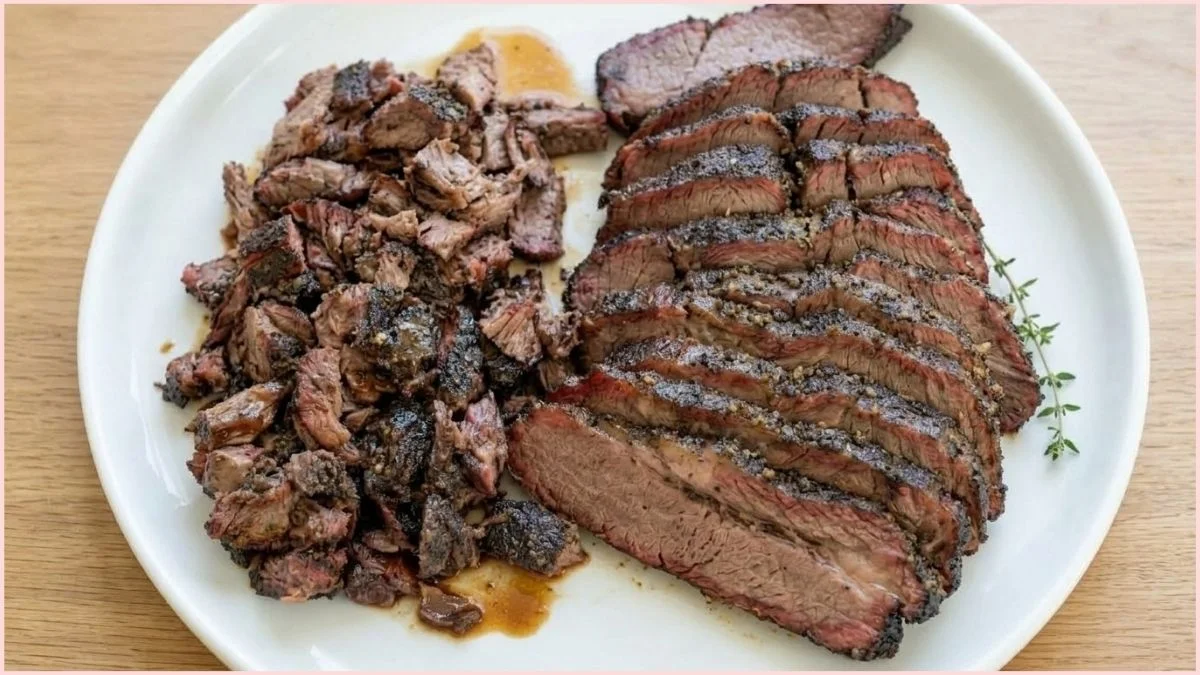
Traeger Chuck Roast Recipe
There’s something almost meditative about tending a smoker on a lazy weekend afternoon, and this Traeger chuck roast recipe has become my go-to for exactly that kind of day.
I first tried the foil-boat method on a whim, using beef grease and sliced onions instead of a fussy marinade, and the result floored me – deeply smoky, juicy, and tender enough to pull apart with a fork.
If you’ve ever wondered how to turn a humble cut like chuck roast into something that tastes like it came from a barbecue joint, this Traeger chuck roast method is the answer. It’s low-effort, high-reward, and practically foolproof.
For the perfect finishing touch, serve this smoky Traeger chuck roast with Creamy Orzo Spinach & Feta and crisp, tangy Colonel Sanders Coleslaw for a balanced, flavorful BBQ-style meal.
What Is Traeger Chuck Roast and Why Do Fans Love It?
Traeger chuck roast is a slow-smoked take on a classic pot roast, swapping the oven for wood-fired smoke and low, steady heat. The flavor profile is rich and savory, with a mild smokiness layered over the roast’s natural beefiness, plus a subtle porky depth from the beef grease binder.
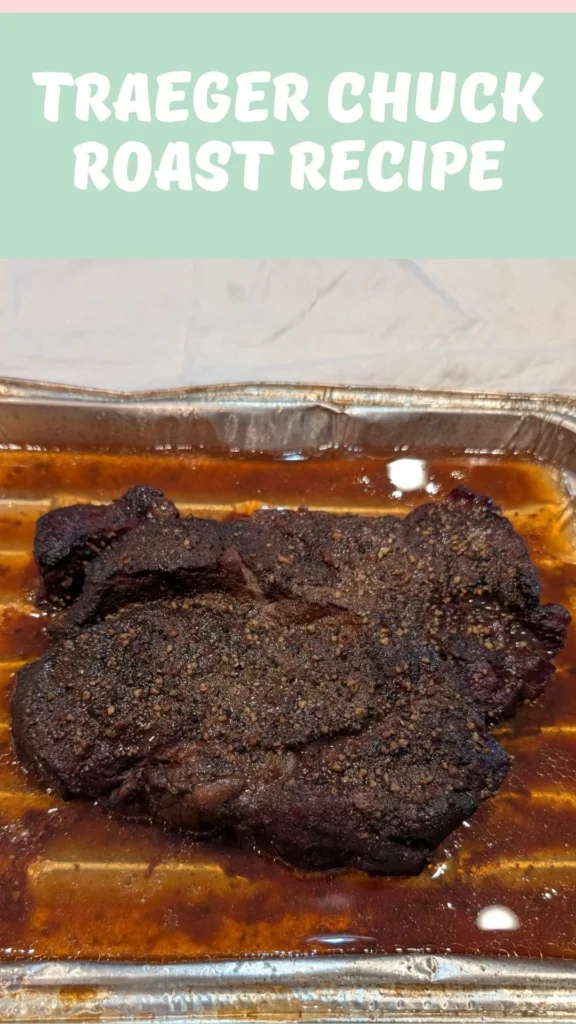
It’s nostalgic in the way great comfort food is – reminiscent of Sunday dinners, but elevated with real pit flavor. Compared to smoked brisket, chuck roast is more forgiving and budget-friendly, while still delivering that coveted bark and tenderness.
What makes it unique is the foil-boat technique: it traps juices like a braise while still letting smoke penetrate the meat, giving you the best of both cooking worlds in one pan.
Traeger Chuck Roast Ingredients
- 1 chuck roast (2½–3 pounds)
- Beef
- 2–3 medium onions, sliced
- Heavy-duty aluminum foil
- Your favorite beef seasoning or spice rub (salt, pepper, garlic powder, paprika, etc., to taste)
- Temperature probe/meat thermometer
Key Ingredient Substitutions
Chuck roast: If chuck isn’t available, a brisket flat, bottom round, or even a pork shoulder can work with similar low-and-slow timing.
Beef grease binder: No rendered grease on hand? Olive oil, melted butter, or yellow mustard all work well to help the seasoning stick.
Onions: Yellow onions are classic, but sweet onions (like Vidalia) add extra caramelized sweetness, while shallots lend a milder, more delicate flavor if that’s what you prefer.
Seasoning blend: No pre-made rub? A simple mix of kosher salt, black pepper, garlic powder, and smoked paprika mimics most store-bought beef rubs perfectly.
Tools You Need to Make This Recipe at Home
- Traeger or other pellet smoker
- Heavy-duty aluminum foil
- Sharp knife and cutting board
- Digital meat/temperature probe
- Heat-resistant gloves
- Rimmed baking sheet or tray (for transporting the foil packet)
- Large bowl or dish (for resting)
Prep time: 15 minutes
Cook time: Approximately 4–4½ hours
Rest time: 1 hour
Total time: About 5½–6 hours
Step-by-Step Instructions to Make This Traeger Chuck Roast Recipe
1. Prep your station. Wash your hands thoroughly, then lay out a large sheet of heavy-duty aluminum foil.
2. Season the roast. Place the chuck roast on the foil and coat it generously with Beef or beef grease as a binder, then apply your seasoning blend evenly on all sides.
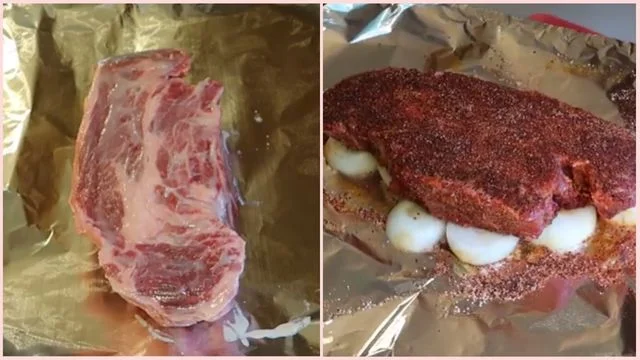
3. Build an onion platform. Slice your onions and layer them underneath the roast directly on the foil – this protects the meat and adds flavor.
4. Shape the foil boat. Raise the edges of the foil around the roast to form a shallow pan that will catch juices while still allowing smoke to reach the meat. Do not puncture the foil.
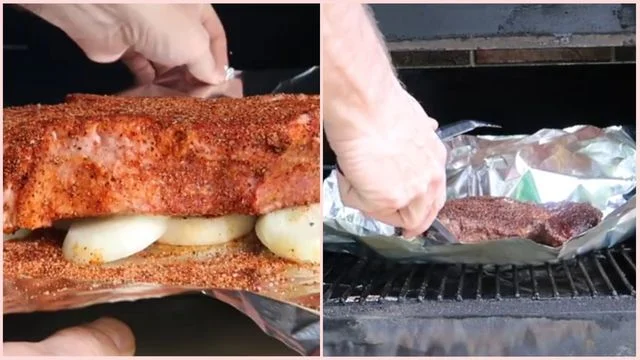
5. Preheat the smoker. Set your Traeger to 225°F and let it come to temperature.
6. Start smoking. Carefully place the foil boat with the roast onto the grill grates. Close the lid and smoke for about 1½ hours.
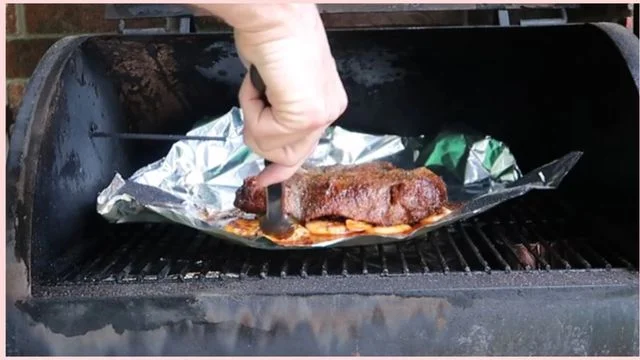
7. Flip and probe. After 1½ hours, flip the roast (liquid should have pooled at the bottom and onions will be softening). Insert your temperature probe and pile some onions on top of the meat for added moisture.
8. Continue smoking. Close the lid and cook for another 1½ hours or so, until internal temperature reaches 165–170°F.
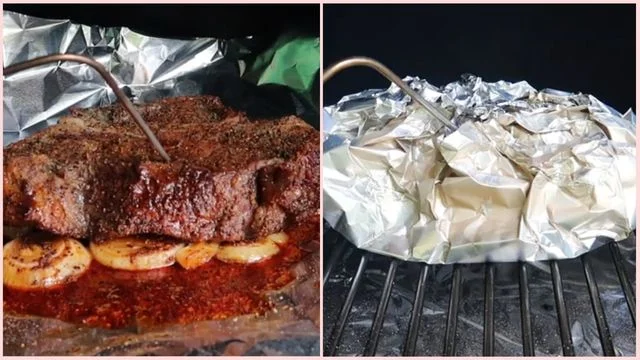
9. Seal the packet. Once it hits 165–170°F, fold the foil closed around the roast without puncturing it, sealing in the juices.
10. Finish cooking. Continue smoking until internal temperature reaches about 198°F, checking for fork-tenderness. Cook longer if it’s still firm.
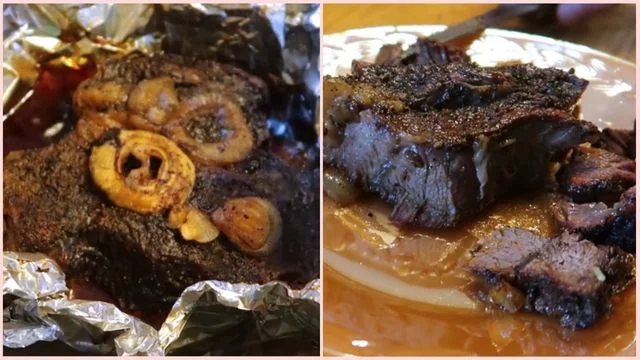
11. Rest the roast. Using heat-resistant gloves, carefully remove the hot, liquid-filled foil packet and set it in a dish or bowl. Let it rest for 1 hour.
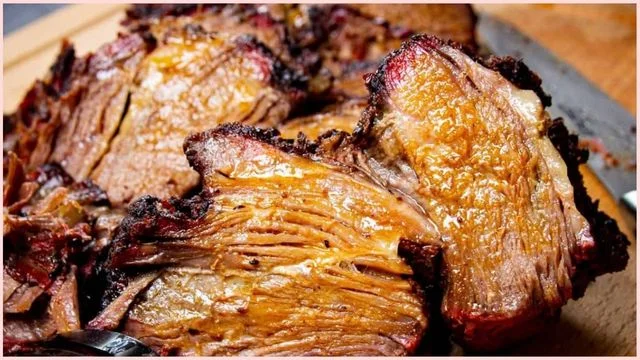
12. Serve. Unwrap, slice or shred the meat, and serve warm.
Pro Tips for Getting the Flavor Just Right
The biggest mistake people make with a Traeger chuck roast is rushing the cook – resist the urge to raise the temperature to speed things up; 225°F low-and-slow is what breaks down the connective tissue into tenderness.
Never skip the resting hour either; cutting too soon lets all those hard-earned juices spill out instead of redistributing through the meat. Make sure your foil boat has no punctures, since even a small tear lets liquid escape and dries out the roast.
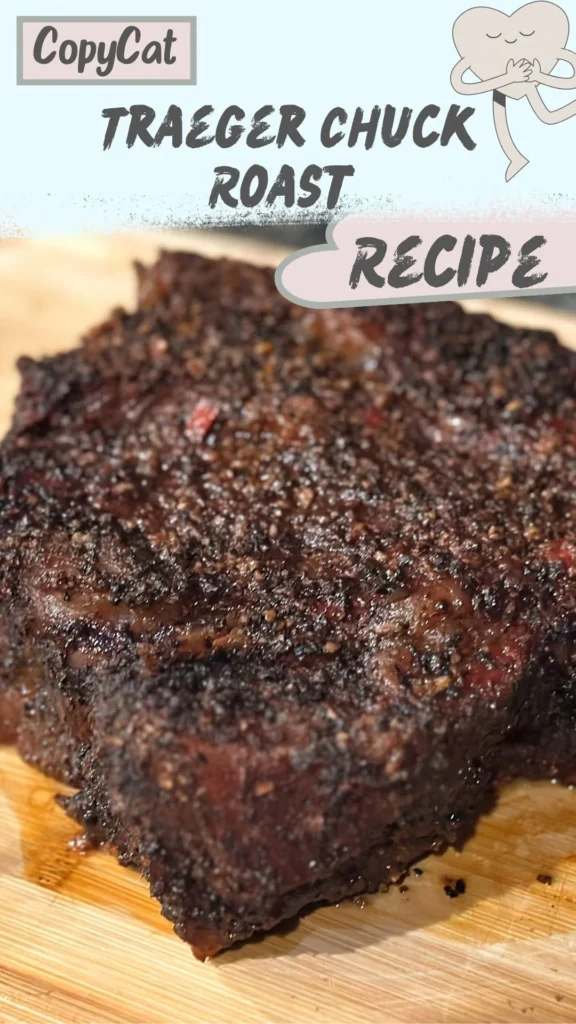
When flipping halfway through, work carefully – the meat is still fragile, and you want the onions to stay intact as a moisture barrier. Finally, trust the internal temperature over the clock: 198°F combined with a tender, “probe-like-butter” texture matters more than hitting an exact time window, since every roast varies slightly in size and marbling.
Easy Variations to Customize This Traeger Chuck Roast
Want more heat? Add cayenne or crushed red pepper to your rub for a spicy kick. Prefer a deeper smoke flavor? Swap your pellets for hickory or mesquite instead of a milder wood like apple or cherry.
For a garlicky twist, tuck whole smashed garlic cloves in with the onions before sealing the foil. You can also add a splash of beef broth or Worcestershire sauce to the foil boat for extra richness.
If you want a Tex-Mex spin, season with cumin, chili powder, and lime zest, then shred the meat for tacos instead of slicing it for a classic roast presentation.
Best Ways to Serve Traeger Chuck Roast in Your Meals
This Traeger chuck roast is endlessly versatile once it’s off the smoker. For a classic comfort-food plate, serve thick slices alongside creamy mashed potatoes and roasted or steamed vegetables, spooning some of the reserved onion juices over the top as a natural gravy.
If you’re feeding a crowd, shred the meat and pile it onto toasted buns with extra caramelized onions for hearty smoked beef sandwiches. It also shines in tacos or burritos – just shred, add a squeeze of lime, and top with fresh cilantro and pickled onions. For a lighter option, serve it over a bed of greens or grain bowls with roasted veggies and a drizzle of chimichurri.
Leftovers work beautifully stirred into soups, stews, or even folded into a hearty beef hash for breakfast. However you plate it, save the onion-infused juices from the foil packet – they double as an incredible dipping jus or gravy base that ties the whole meal together.
How to Store and Keep Traeger Chuck Roast Fresh
Store leftover chuck roast in an airtight container in the refrigerator for up to 4 days, keeping some of the reserved juices with it to preserve moisture. For longer storage, freeze portions (with juices) for up to 3 months.
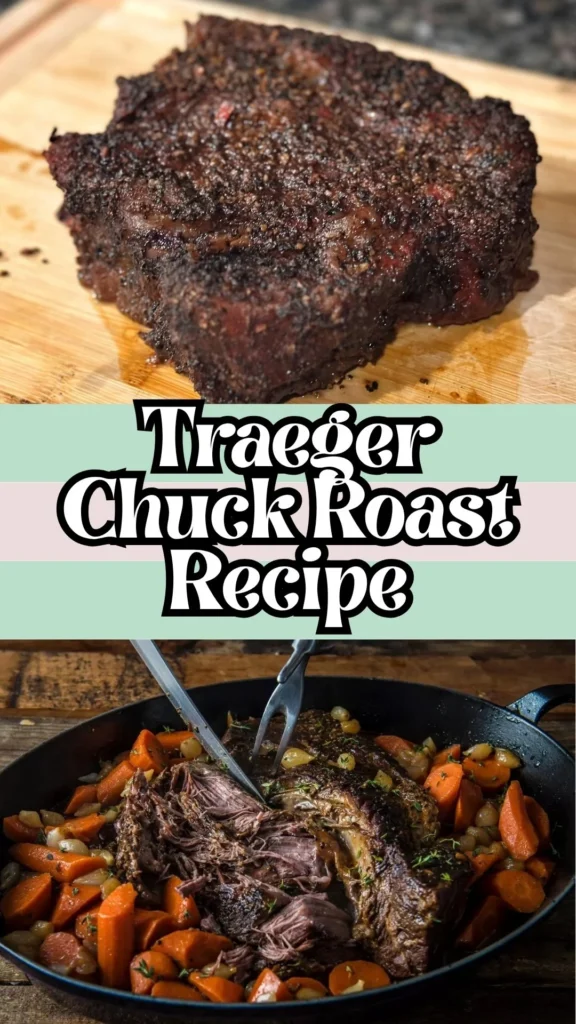
To reheat, warm gently in a covered skillet over low heat with a splash of broth, or microwave in short bursts, until just heated through – avoid high heat, which can dry out the meat.
Nutrition Facts and Dietary Notes
A typical 4-ounce serving of Traeger chuck roast contains roughly 260–300 calories, 20–24g of protein, and 18–22g of fat, though exact values depend on trim and grease used. It’s naturally gluten-free and keto-friendly as written.
For a leaner version, trim visible fat before cooking and use less grease as a binder. Chuck roast is also a good source of iron, zinc, and B vitamins, making it a nutrient-dense choice alongside its rich flavor. Pair with fiber-rich vegetables to round out the meal.
How long does it take to smoke a chuck roast on a Traeger?
Plan for about 4 to 4½ hours at 225°F, depending on the size of your roast, plus a full hour of resting time afterward.
Why use the foil-boat method instead of just smoking it directly?
The foil boat traps flavorful juices and keeps the roast moist like a braise, while the open top still lets smoke flavor penetrate the meat during the first stage of cooking.
What internal temperature should chuck roast reach for pulling?
Aim for about 198°F, then check for tenderness with a fork or probe – it should slide in with little resistance.
Can I use a different wood pellet flavor?
Yes – hickory or mesquite gives a bolder smoke flavor, while applewood or cherry offers a milder, slightly sweet profile.
Do I have to use Beef grease as the binder?
No, olive oil, melted butter, or mustard all work well if you don’t have beef
Can I skip the resting step?
It’s not recommended – resting for a full hour allows the juices to redistribute, which is key to getting tender, moist meat instead of a dry roast.
Traeger Chuck Roast Recipe
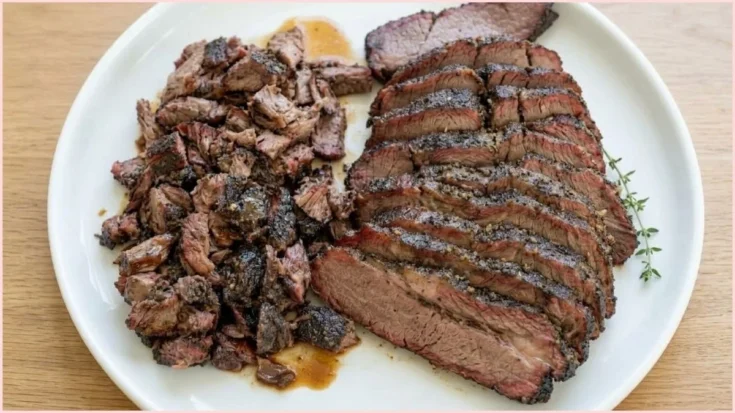
There’s something almost meditative about tending a smoker on a lazy weekend afternoon, and this Traeger chuck roast recipe has become my go-to for exactly that kind of day. I first tried the foil-boat method on a whim, using beef grease and sliced onions instead of a fussy marinade, and the result floored me – deeply smoky, juicy, and tender enough to pull apart with a fork.
Ingredients
- 1 chuck roast (2½–3 pounds)
- Beef
- 2–3 medium onions, sliced
- Heavy-duty aluminum foil
- Your favorite beef seasoning or spice rub
- Temperature probe/meat thermometer
Instructions
- Prep your station. Wash your hands thoroughly, then lay out a large sheet of heavy-duty aluminum foil.
- Season the roast. Place the chuck roast on the foil and coat it generously with Beef or beef grease as a binder, then apply your seasoning blend evenly on all sides.
- Build an onion platform. Slice your onions and layer them underneath the roast directly on the foil – this protects the meat and adds flavor.
- Shape the foil boat. Raise the edges of the foil around the roast to form a shallow pan that will catch juices while still allowing smoke to reach the meat. Do not puncture the foil.
- Preheat the smoker. Set your Traeger to 225°F and let it come to temperature.
- Start smoking. Carefully place the foil boat with the roast onto the grill grates. Close the lid and smoke for about 1½ hours.
- Flip and probe. After 1½ hours, flip the roast (liquid should have pooled at the bottom and onions will be softening). Insert your temperature probe and pile some onions on top of the meat for added moisture.
- Continue smoking. Close the lid and cook for another 1½ hours or so, until internal temperature reaches 165–170°F.
- Seal the packet. Once it hits 165–170°F, fold the foil closed around the roast without puncturing it, sealing in the juices.
- Finish cooking. Continue smoking until internal temperature reaches about 198°F, checking for fork-tenderness. Cook longer if it’s still firm.
- Rest the roast. Using heat-resistant gloves, carefully remove the hot, liquid-filled foil packet and set it in a dish or bowl. Let it rest for 1 hour.
- Serve. Unwrap, slice or shred the meat, and serve warm.
Notes
Store leftover chuck roast in an airtight container in the refrigerator for up to 4 days, keeping some of the reserved juices with it to preserve moisture. For longer storage, freeze portions (with juices) for up to 3 months. To reheat, warm gently in a covered skillet over low heat with a splash of broth, or microwave in short bursts, until just heated through – avoid high heat, which can dry out the meat.
Nutrition Information:
Yield:
8Serving Size:
1Amount Per Serving: Calories: 250
This Traeger chuck roast recipe proves that a few humble ingredients – onions, grease, and patience – can produce something truly special. The foil-boat method makes it nearly foolproof, delivering fork-tender meat with rich, smoky flavor every time.
Whether you slice it for a Sunday dinner or shred it for sandwiches and tacos, it’s a recipe worth adding to your regular smoker rotation. Fire up the Traeger and give it a try.
If you enjoyed this recipe, be sure to save it and share it with friends. Don’t forget to follow us on Pinterest and YouTube for more cozy and comfort recipes.