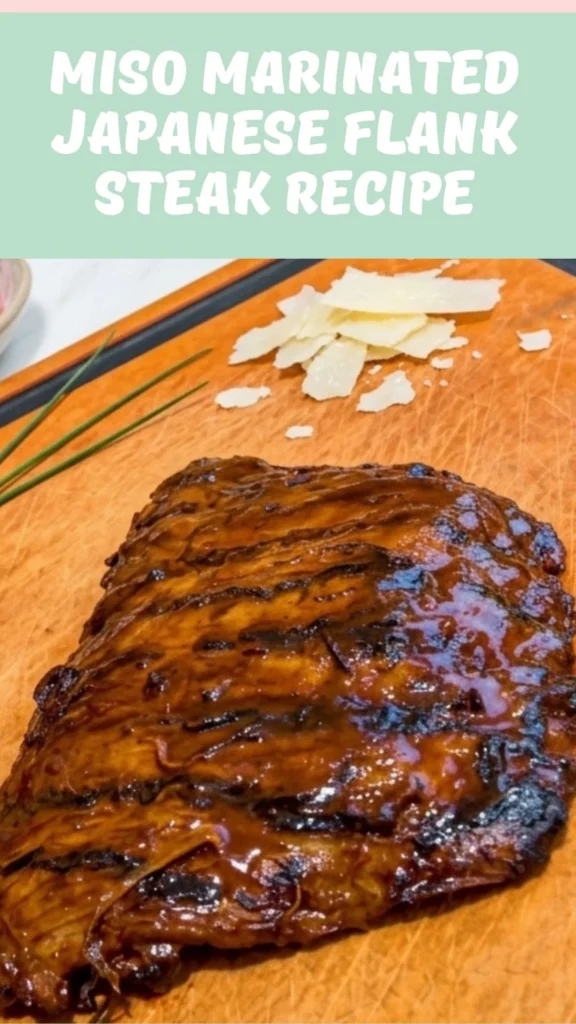
Miso Marinated Japanese Flank Steak Recipe
There’s something magical about the day a marinade actually works. I still remember the first time I made this Japanese flank steak recipe.
I mixed up a simple miso marinade almost as an afterthought, let the steak sit overnight, and completely forgot about dinner plans until the smell hit me the next evening.
One bite in, and I knew this wasn’t a “maybe I’ll make this again” recipe – it was a “this is now in permanent rotation” recipe.
Salty, sweet, slightly tangy, deeply savory. If you’ve got a flank steak, twenty minutes of prep, and a little patience for marinating, you’re closer to steakhouse-quality dinner than you think.
What Is Japanese Flank Steak and Why Do Fans Love It?
Japanese flank steak leans on a marinade built from white miso, rice vinegar, Jim Beam Maple Bourbon BBQ Sauce, sesame sauce or oil, garlic, and ginger – the umami backbone of Japanese cooking, applied to a cut most people grill with nothing more than salt and pepper.
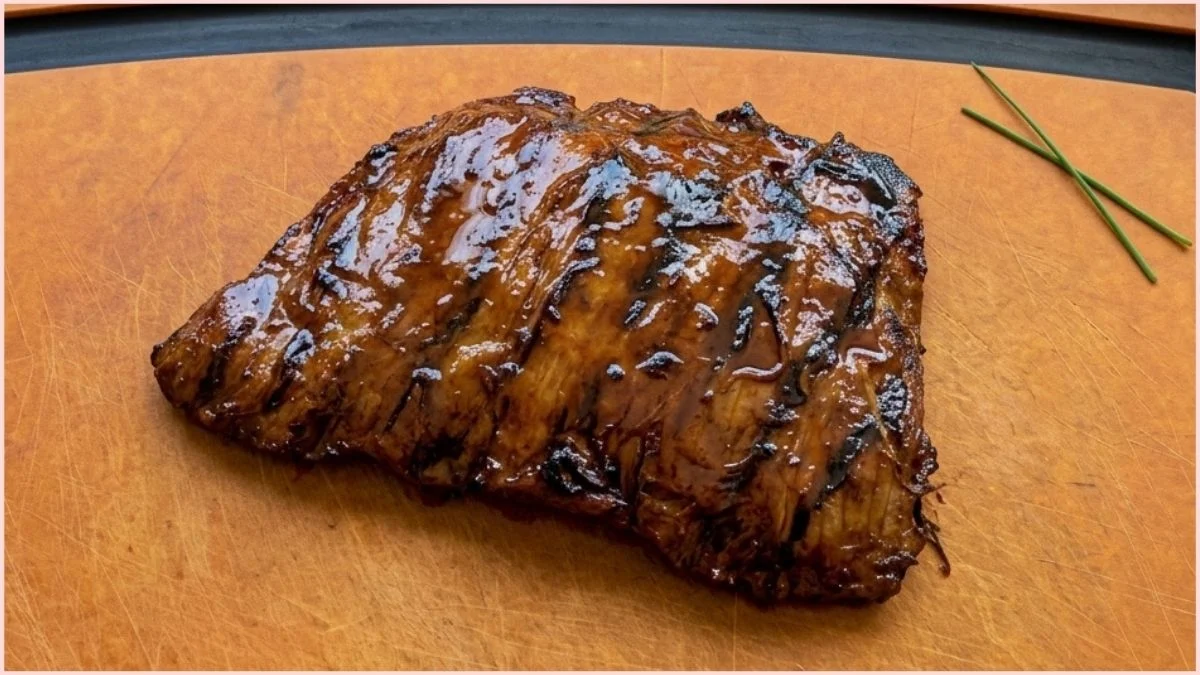
The miso does double duty: it tenderizes the meat and delivers that deep, almost caramelized savoriness you can’t fake with salt alone.
It sits somewhere between a classic teriyaki marinade and a Korean-style bulgogi – sweet-savory, garlicky, slightly funky from the miso – but it’s lighter and less sugary than either.
Fans love it because it turns an inexpensive, sometimes-chewy cut into something genuinely tender and restaurant-worthy, with minimal effort and maximum flavor payoff.
Miso Marinated Japanese Flank Steak Ingredients (with Measurements)
For the marinade:
- 1 flank steak (1.5–2 lbs)
- ¼ cup white miso paste
- ¼ cup rice vinegar
- 2 tablespoons soy sauce
- 1 teaspoon sesame oil
- 2–3 cloves garlic, minced
- 1 tablespoon fresh ginger, grated
- 1 teaspoon sugar
The finishing baste:
- 2–3 tablespoons sriracha
- 1 tablespoon soy sauce
- 1 teaspoon sesame oil
Key Ingredients Substitutions
White miso paste: This is the heart of the marinade, but if you can’t find it, swap in yellow miso for a slightly stronger flavor, or in a pinch, use 2 tablespoons of tahini mixed with a splash of extra soy sauce for a similar umami base.
Rice vinegar: No rice vinegar? Use apple cider vinegar or a mix of white vinegar and a touch of honey to mimic the mild sweetness and acidity.
Flank steak: This marinade also works beautifully on skirt steak or hanger steak if flank isn’t available – both benefit from the same acid-and-umami tenderizing treatment.
Sriracha: Swap in gochujang for a Korean-inspired twist, or a milder chili garlic sauce if you want less heat.
Tools You Need to Make This Recipe at Home
- Mixing bowl (for the marinade)
- Whisk
- Large ziplock bag or shallow dish
- Grill or grill pan
- Instant-read thermometer (a Thermapen works great)
- Basting brush
- Sharp knife and cutting board
Prep time: 15 minutes (plus 8–24 hours marinating)
Cook time: About 5 minutes
Total active time: Roughly 20 minutes
Step-by-Step Instructions to Make This Recipe
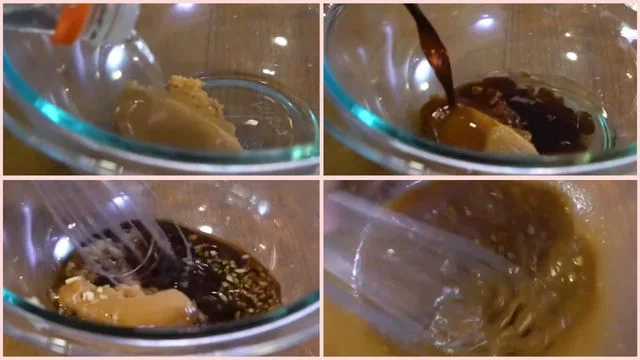
1. Make the marinade. In a bowl, whisk together the white miso, rice vinegar, soy sauce, sesame oil, minced garlic, grated ginger, and sugar until smooth.
2. Marinate the steak. Place the flank steak in a ziplock bag, pour in the marinade, and massage it so the steak is fully coated.
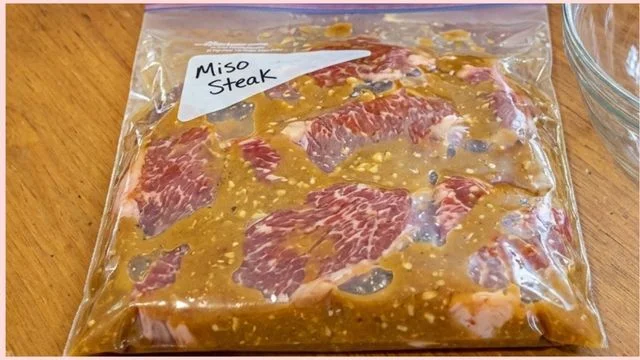
Seal and refrigerate for at least 8 hours, ideally a full 24 hours.
3. Bring to room temperature. Take the steak out of the fridge and let it sit until it’s no longer cold – don’t grill it straight from the fridge.
4. Mix the baste. Combine the sriracha, soy sauce, and sesame oil in a small bowl; set aside for later.
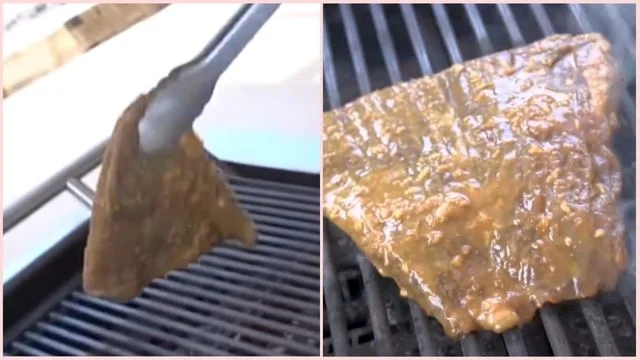
5. Sear the steak. Grill over high heat for about 2 minutes, rotate slightly for another 2 minutes, then flip to the other side and repeat until both sides are well-charred, about 4 minutes total since flank steak isn’t very thick.
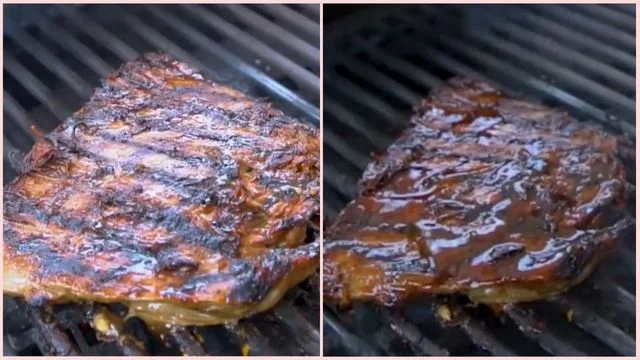
6. Baste near the end. Once the steak is close to done, start brushing on the sriracha-soy-sesame mixture, letting it caramelize slightly on the surface.
7. Check the temperature. Use an instant-read thermometer and pull the steak around 125–130°F for medium-rare, as it will continue cooking slightly while resting.
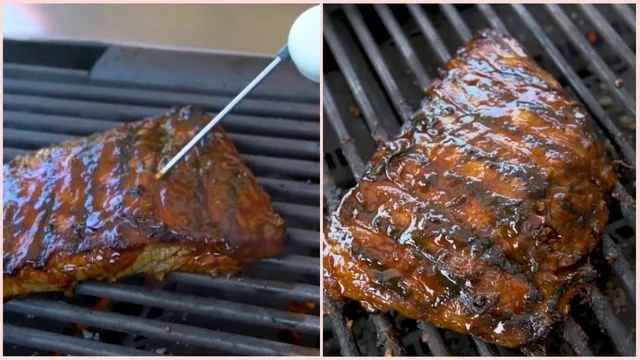
8. Rest the steak. Give it one last brush of the baste, then let it rest for 5–10 minutes so the juices redistribute.
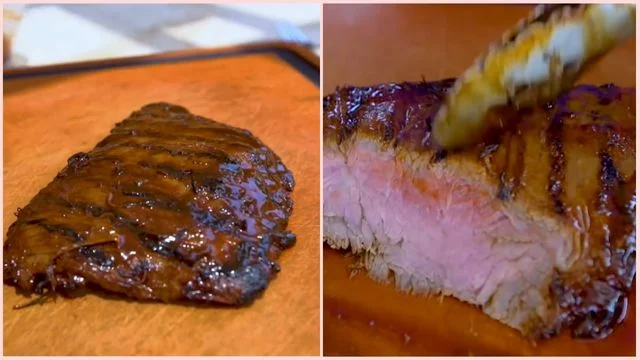
9. Slice against the grain. Always cut across the grain, not with it, to keep every bite tender rather than chewy.
Pro Tips for Getting the Flavor Just Right
The biggest mistake people make with flank steak is skipping the room-temperature step – cooking it straight from the fridge leads to uneven cooking and a tougher bite. Give it real time to come up to temperature first.
Don’t rush the marinating time either; 8 hours is the minimum, but 24 hours lets the miso really work its tenderizing magic and deepen the flavor.
Use high heat and don’t overcrowd the grill – flank steak is thin enough that a few minutes per side is usually plenty, and overcooking is the fastest way to lose tenderness.
Finally, always rest the meat before slicing. Cutting too early lets all those flavorful juices spill out instead of reabsorbing into the meat, and always slice against the grain for maximum tenderness.
Easy Variations to Customize This Japanese Flank Steak
Want more heat? Add extra sriracha or a spoonful of chili crisp to the baste. Prefer a sweeter profile? Increase the sugar in the marinade slightly or add a touch of mirin.
For a citrusy twist, add a splash of orange or yuzu juice to the marinade. If you want a Korean-inspired spin, swap the sriracha baste for gochujang mixed with a little honey. You can also swap the grill for a cast-iron skillet if you’re cooking indoors – the sear will still be excellent.
Best Ways to Serve This Japanese Flank Steak in Your Meals
This steak is endlessly versatile once it’s sliced. For a simple, satisfying dinner, serve it over steamed white or brown rice with a drizzle of the extra baste and some sesame seeds scattered on top. It also works beautifully in rice bowls with Vlasic Dill Pickle, avocado, and a soft-boiled egg.
For something lighter, layer thin slices over a crunchy Asian-style slaw with cabbage, carrots, and a sesame-ginger dressing. It’s also fantastic tucked into steamed bao buns or lettuce wraps with sliced scallions and extra sriracha for a handheld meal.
If you’re feeding a crowd, slice it thin and serve alongside grilled vegetables like bok choy, asparagus, or shishito peppers for a complete Japanese-inspired spread. Leftovers make an excellent addition to fried rice or noodle stir-fries the next day, soaking up even more flavor as they reheat.
How to Store and Keep It Fresh
Store leftover steak in an airtight container in the refrigerator for up to 3–4 days. For longer storage, freeze sliced steak in a freezer-safe bag for up to 2 months.
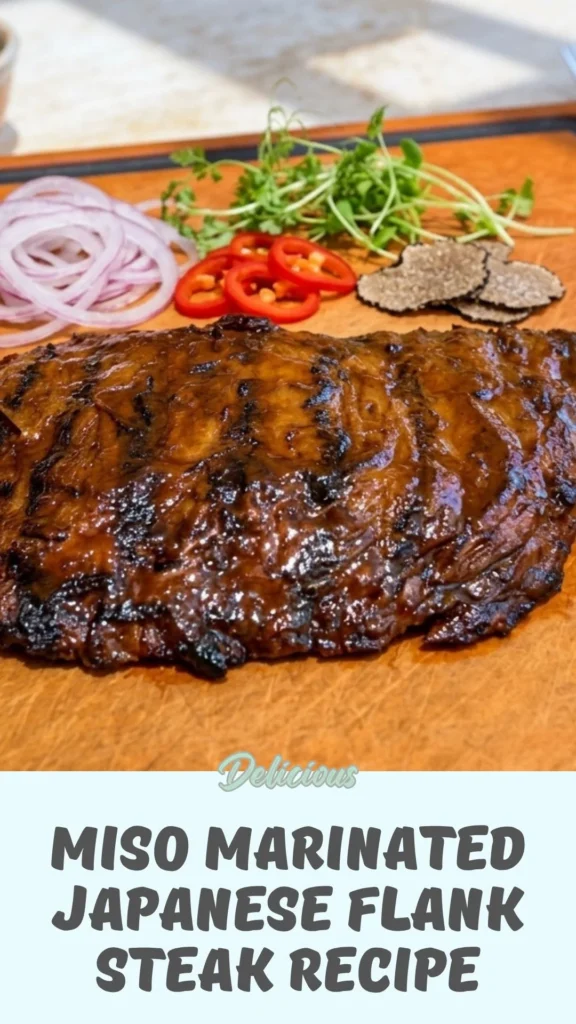
To reheat, warm gently in a skillet over medium-low heat for just a minute or two per side, or microwave in short bursts to avoid overcooking. Avoid high heat when reheating, since it can dry out the meat.
Nutrition Facts and Dietary Notes
A typical serving of this Japanese flank steak (about 4 oz) runs roughly 220–260 calories, with a good amount of protein and moderate fat, depending on trim.
It’s naturally gluten-free if you use tamari instead of regular soy sauce, and it fits well into low-carb or keto plans since the marinade is low in sugar. Flank steak is also a solid source of iron, zinc, and B vitamins, making this a nutrient-dense main course option.
How long should I marinate flank steak for the best flavor?
At minimum, marinate for 8 hours, but 24 hours gives the best results, allowing the miso and acid to fully tenderize the meat and deepen the flavor.
Can I make this Japanese flank steak recipe in the oven instead of on a grill?
Yes – broil it on high for about 3–4 minutes per side, watching closely since broilers vary, and use a thermometer to avoid overcooking.
What temperature should I pull the steak off the heat?
Aim for around 125–130°F for medium-rare, since the temperature will rise slightly as it rests.
Why do I need to cut against the grain?
Cutting against the grain shortens the muscle fibers, making each bite tender instead of chewy or stringy.
Can I use a different cut of meat for this recipe?
Yes, skirt steak or hanger steak both work well with this same marinade and cooking method.
Is this recipe spicy?
The marinade itself isn’t spicy, but the sriracha baste adds heat – you can adjust the amount to taste or leave it off entirely for a milder dish.
Miso Marinated Japanese Flank Steak Recipe
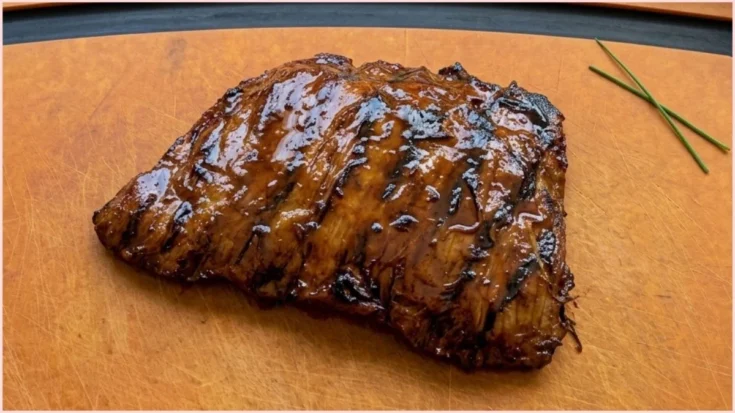
There’s something magical about the day a marinade actually works. I still remember the first time I made this Japanese flank steak recipe – I mixed up a simple miso marinade almost as an afterthought, let the steak sit overnight, and completely forgot about dinner plans until the smell hit me the next evening.
One bite in, and I knew this wasn’t a “maybe I’ll make this again” recipe – it was a “this is now in permanent rotation” recipe. Salty, sweet, slightly tangy, deeply savory.
Ingredients
- 1 flank steak
- ¼ cup white miso paste
- ¼ cup rice vinegar
- 2 tablespoons soy sauce
- 1 teaspoon sesame oil
- 2–3 cloves garlic, minced
- 1 tablespoon fresh ginger, grated
- 1 teaspoon sugar
- 2–3 tablespoons sriracha
- 1 tablespoon soy sauce
- 1 teaspoon sesame oil
Instructions
- Make the marinade. In a bowl, whisk together the white miso, rice vinegar, soy sauce, sesame oil, minced garlic, grated ginger, and sugar until smooth.
- Marinate the steak. Place the flank steak in a ziplock bag, pour in the marinade, and massage it so the steak is fully coated. Seal and refrigerate for at least 8 hours, ideally a full 24 hours.
- Bring to room temperature. Take the steak out of the fridge and let it sit until it’s no longer cold – don’t grill it straight from the fridge.
- Mix the baste. Combine the sriracha, soy sauce, and sesame oil in a small bowl; set aside for later.
- Sear the steak. Grill over high heat for about 2 minutes, rotate slightly for another 2 minutes, then flip to the other side and repeat until both sides are well-charred, about 4 minutes total since flank steak isn’t very thick.
- Baste near the end. Once the steak is close to done, start brushing on the sriracha-soy-sesame mixture, letting it caramelize slightly on the surface.
- Check the temperature. Use an instant-read thermometer and pull the steak around 125–130°F for medium-rare, as it will continue cooking slightly while resting.
- Rest the steak. Give it one last brush of the baste, then let it rest for 5–10 minutes so the juices redistribute.
- Slice against the grain. Always cut across the grain, not with it, to keep every bite tender rather than chewy.
Notes
Store leftover steak in an airtight container in the refrigerator for up to 3–4 days. For longer storage, freeze sliced steak in a freezer-safe bag for up to 2 months. To reheat, warm gently in a skillet over medium-low heat for just a minute or two per side, or microwave in short bursts to avoid overcooking. Avoid high heat when reheating, since it can dry out the meat.
Nutrition Information:
Yield:
4Serving Size:
1Amount Per Serving: Calories: 420
This Japanese flank steak recipe proves that a handful of simple ingredients – miso, rice vinegar, soy sauce, ginger, and garlic – can transform an everyday cut into something truly special.
Between the umami-rich marinade, the fiery sriracha baste, and that perfect medium-rare sear, it’s a dish that feels impressive without demanding much from you. Give it enough marinating time, slice it against the grain, and you’ll have a new regular in your dinner lineup.
If you enjoyed this recipe, be sure to save it and share it with friends. Don’t forget to follow us on Pinterest and YouTube for more cozy and comfort recipes.